
Mexico · A 7-day Community Garden expedition, guided by Dakota of Earth
Lost Cities of the Maya
From the colossal Olmec heads of Tabasco deep into the Lacandón rainforest of Chiapas — Palenque rising out of the canopy, Bonampak's blood-and-gold murals, and Yaxchilán, a lost city you reach only by boat on the Usumacinta.
★ Early-bird: the first 5 spots are $2,500 (then $2,850)
The trip
Two of the great ancient worlds of the Americas, in one week.
This route joins the Olmec — the mother culture of Mesoamerica — to the height of the Classic Maya, and ends deep in one of the last great rainforests of the region. You travel it in a small group — never more than 15 — led in person by Dakota Wint — Dakota of Earth — with local guides and nights in the jungle with the Lacandón Maya, who open up their forest, their knowledge, and their way of seeing the world.
Lacanjá
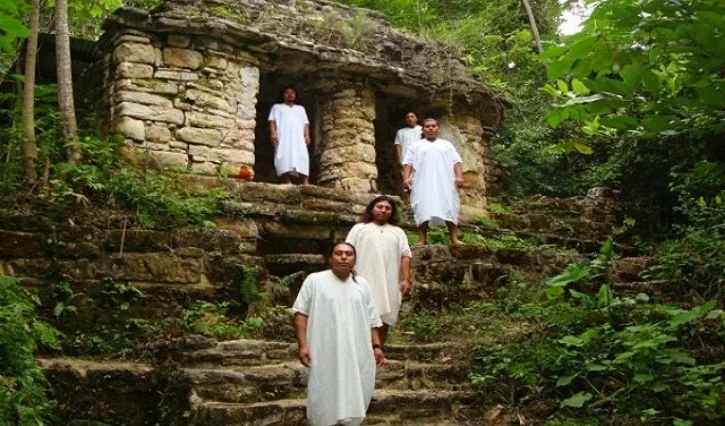
You sleep in the Lacandón Maya village of Lacanjá Chansayab, with an unexcavated Maya city in the forest behind it.
La Venta
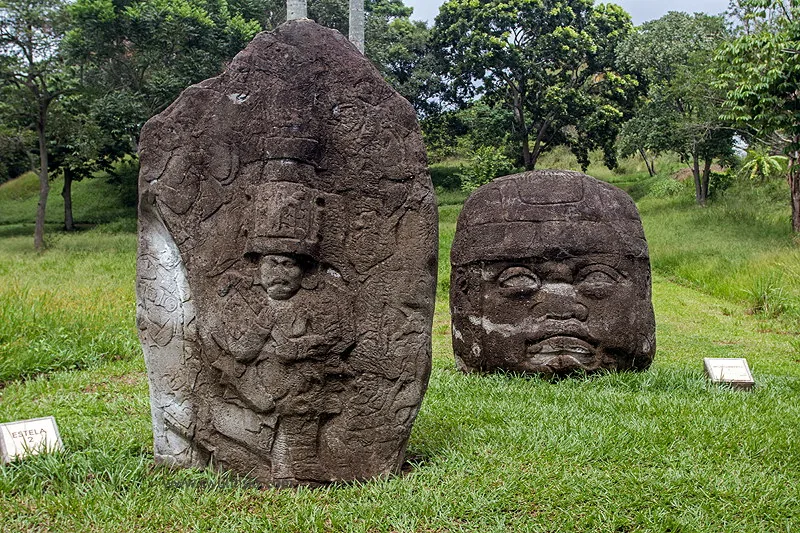
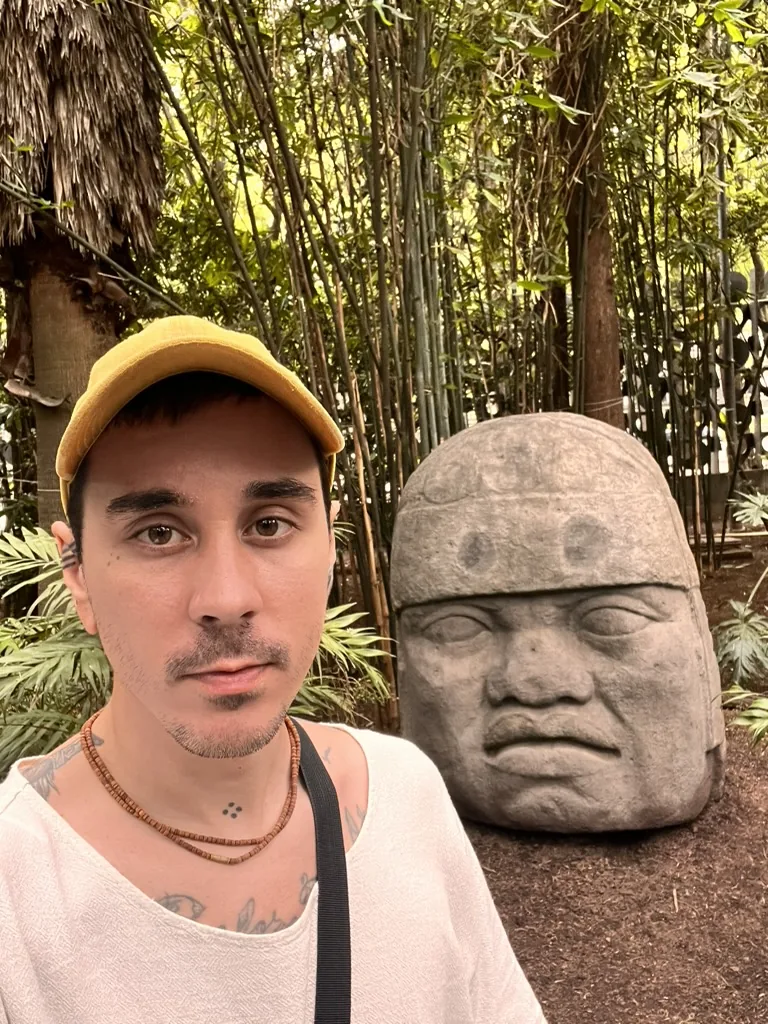
Stand before the three-thousand-year-old colossal Olmec stone heads.
Palenque
The Temple of the Inscriptions and jungle temples at one of the Maya world’s masterpieces.
Bonampak
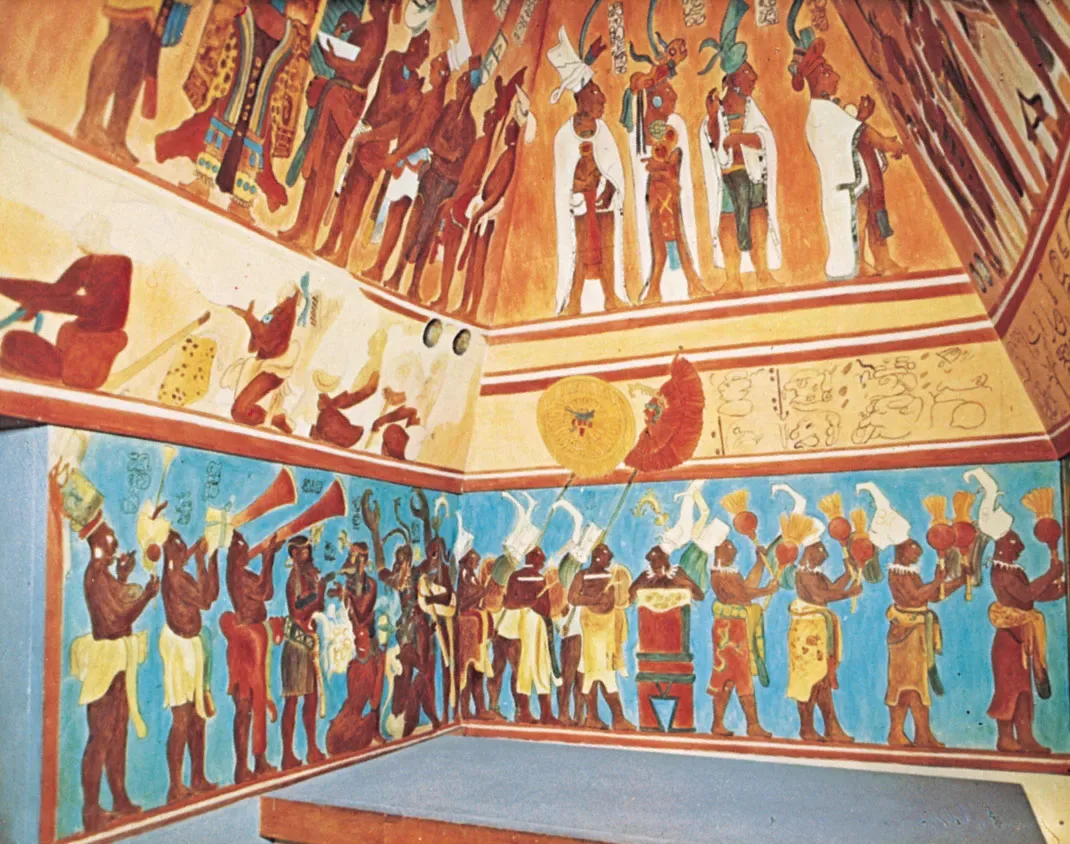
The painted temple — the finest surviving Maya murals, in full color.
Yaxchilán
A lost river city reached only by boat, deep on the Guatemala border.
Who you stay with
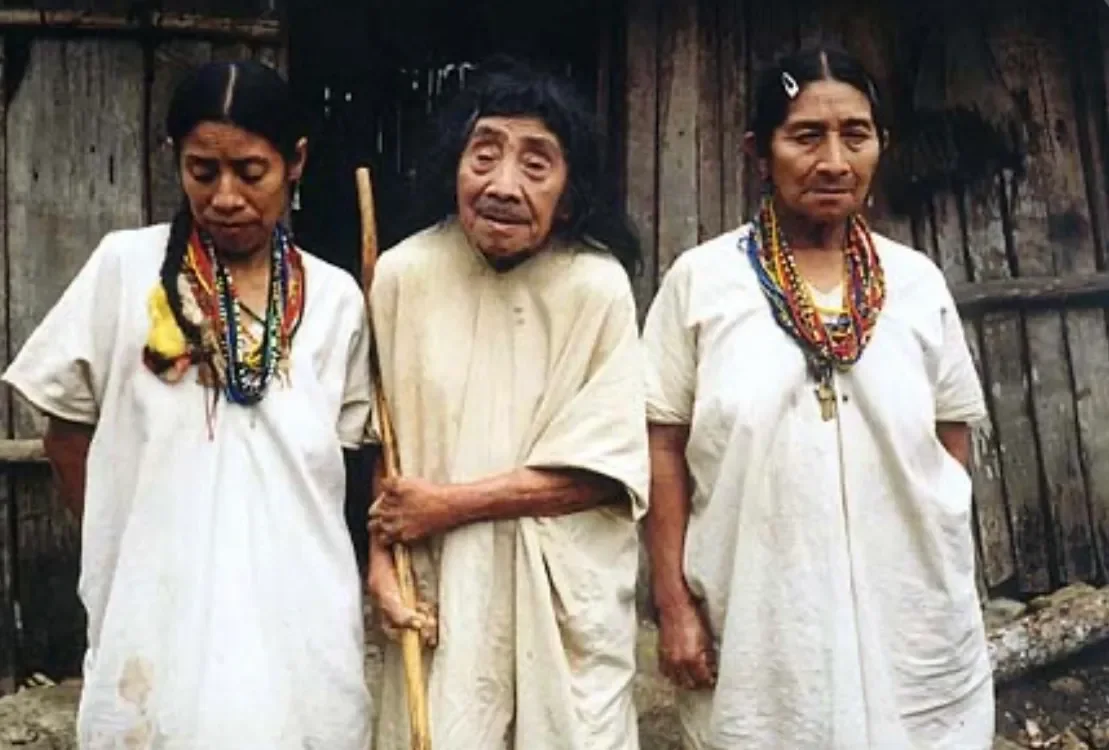
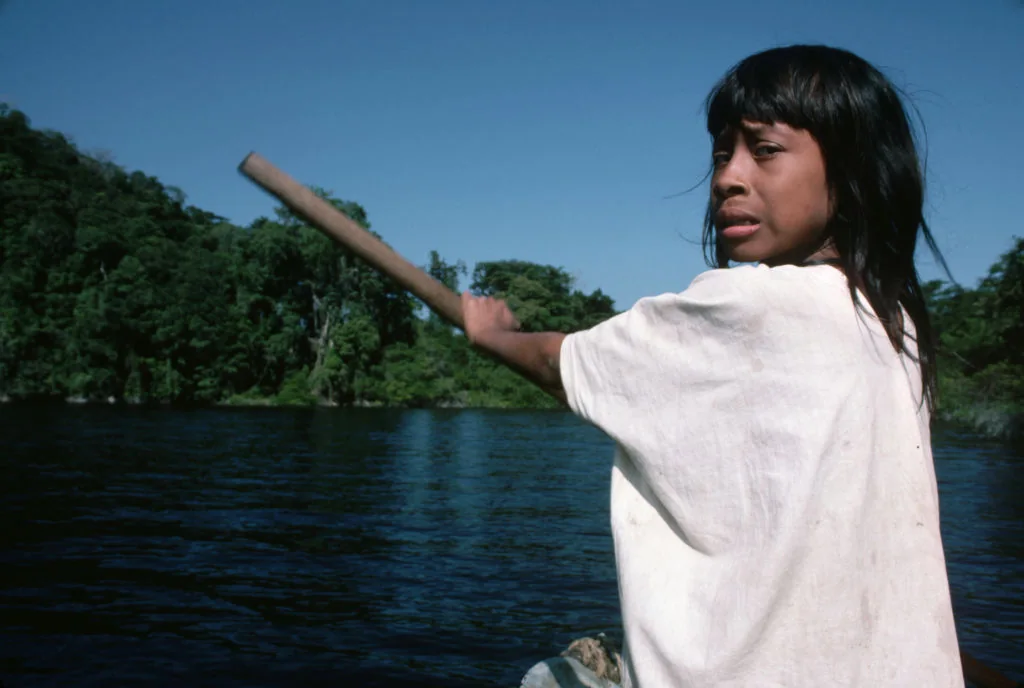
The Hach Winik.
- In 1943 they were counted as almost extinct. There are around a thousand today, and roughly 650 still speak the language.
- They call themselves Hach Winik, the real people, and their language Hach T’an, the real language.
- They never came under Spanish rule. The rest of the Maya world was conquered and converted; the Lacandón stayed scattered deep in the forest and were left alone.
- Into the twentieth century they still walked to the ruined cities to burn copal before the old stones, in clay god-pots with a face moulded on the rim.
- Bonampak was unknown to the outside world until 1946, when Lacandón men walked a photographer in to see it. You stand in those rooms on Day 3.
Lacanjá — a true lost city
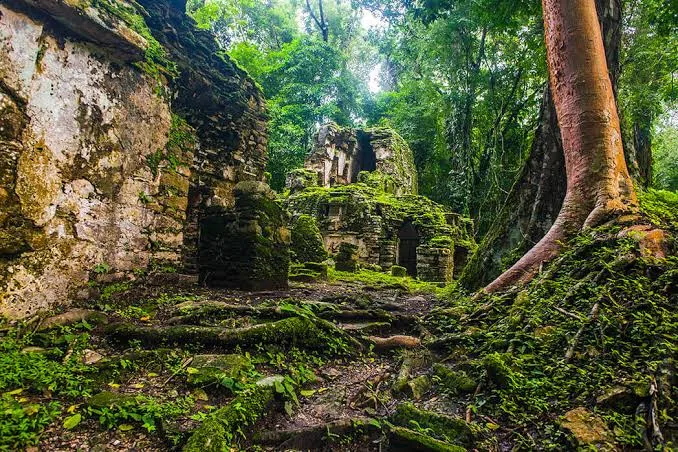
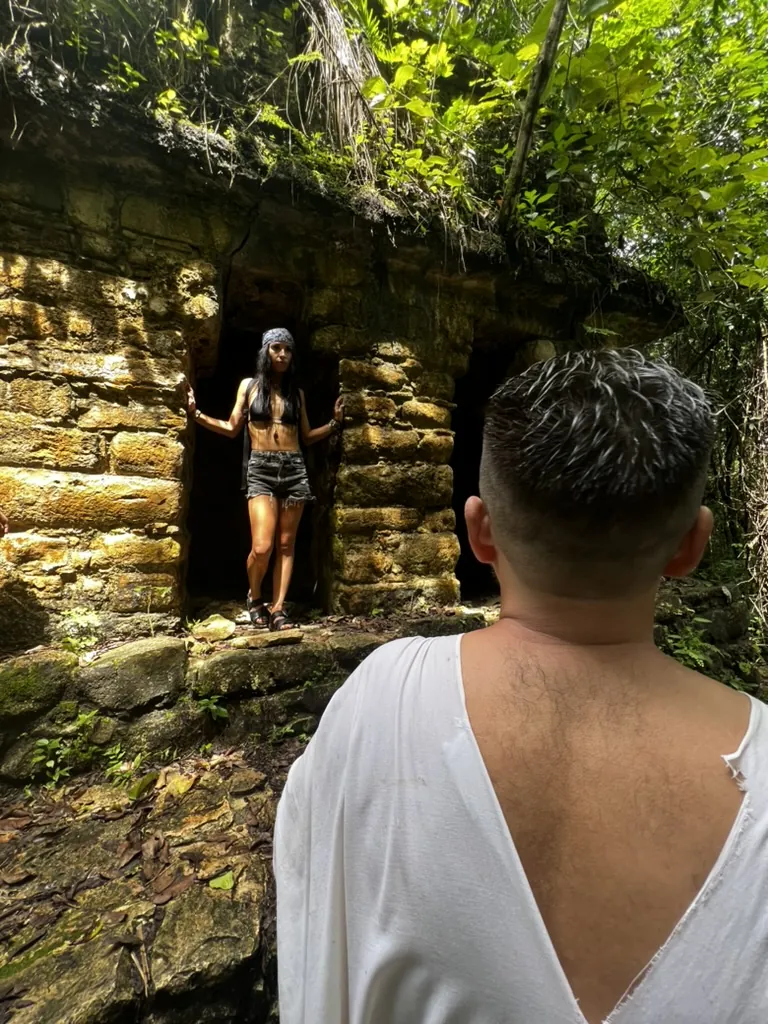
Deep in the Lacandón jungle sits a Maya city that has never been excavated or rebuilt. The forest still covers most of it, and you reach it on foot with the Lacandón family who lives beside the ruins. There are no fences or tourist paths, just temples, stone walls and jungle slowly growing over everything. You sleep only a few minutes away, which makes the whole place feel less like an archaeological site and more like somewhere the ancient world never completely left.
An adventure and an education
Learn from the people who live here.
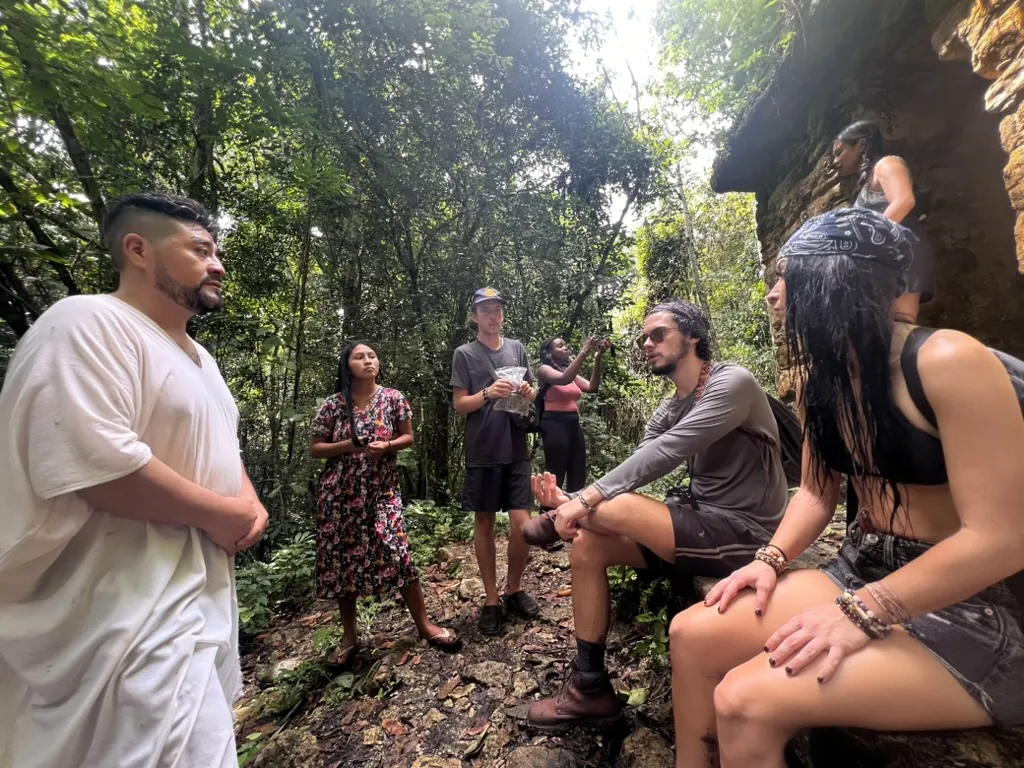
In Lacanjá, part of the week is given to hands-on workshops led by the Lacandón Maya themselves, the Hach Winik — you come home knowing things you can’t learn from a guidebook.
Walk the forest with your hosts
Learn the wild and medicinal plants the Lacandón live on — what feeds them, what heals, what the rainforest provides.
How they see the world
Sit with Lacandón hosts and hear how the Hach Winik understand the forest, the old gods, and their place in it — in their own words.
Speak a little Lacandón Maya
Learn the basics of Lacandón Maya, one of the most endangered languages in the Americas, from the few who still speak it.
The route
Villahermosa to the Usumacinta.
One continuous line from the Gulf lowlands of Tabasco into the deep jungle of eastern Chiapas.
Day by day
Seven days, coast to jungle.
The colossal heads
You land in Villahermosa and go straight to the open-air park where the great Olmec heads were brought for safekeeping and now sit among the trees — eight-foot faces carved from basalt three thousand years ago, from stone dragged a hundred miles out of the mountains. We walk the shaded paths past the altars and thrones, with howler monkeys booming overhead, coatis trotting across the trail, and caimans in the lagoons. Dinner together and a run-through of the week. Plan to land by early afternoon.
Palenque
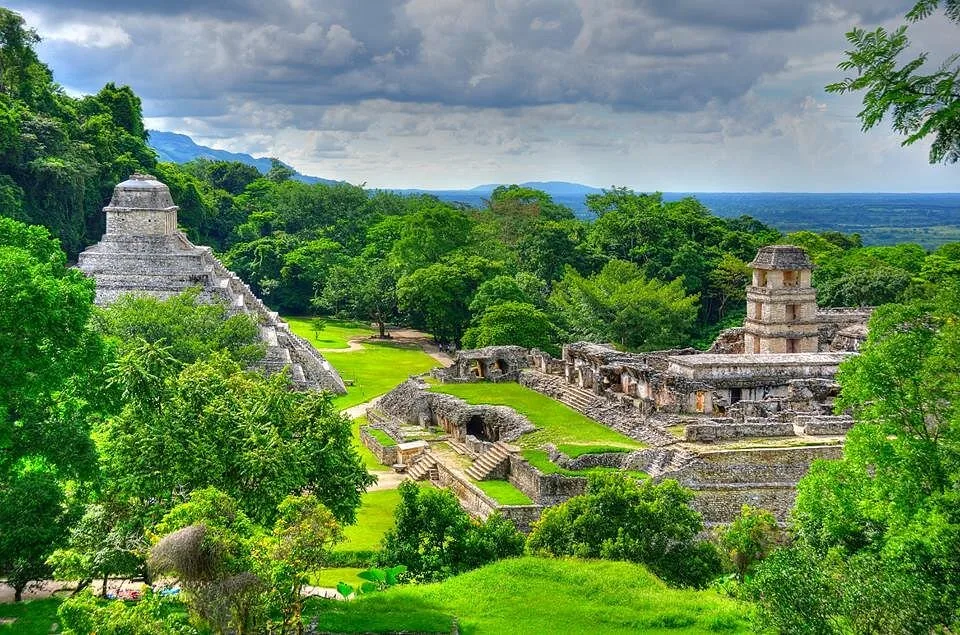
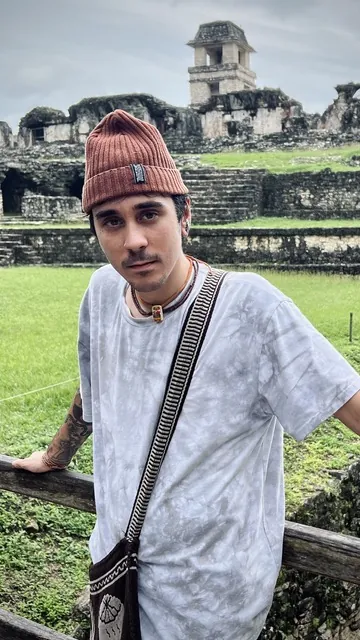
We drive south into Chiapas to Palenque, where the rainforest meets one of the masterpieces of the Maya world. Early, before the heat and the crowds: the Temple of the Inscriptions, where they found the tomb of the king Pakal, the Palace and its tower, and the quieter temples wrapped in jungle. The afternoon is yours to swim or rest.
Into the jungle & Bonampak
We leave the paved road and head deep into the Lacandón rainforest to Lacanjá Chansayab, home of the Lacandón Maya — the Hach Winik — who still live in and protect this forest. After settling into the riverside cabañas, we visit Bonampak, the painted temple, whose three rooms of murals — kings, a battle, musicians in Maya blue — are the finest that survive. Our Lacandón guides, whose community looks after the site, walk us through the walls.
A day in the forest
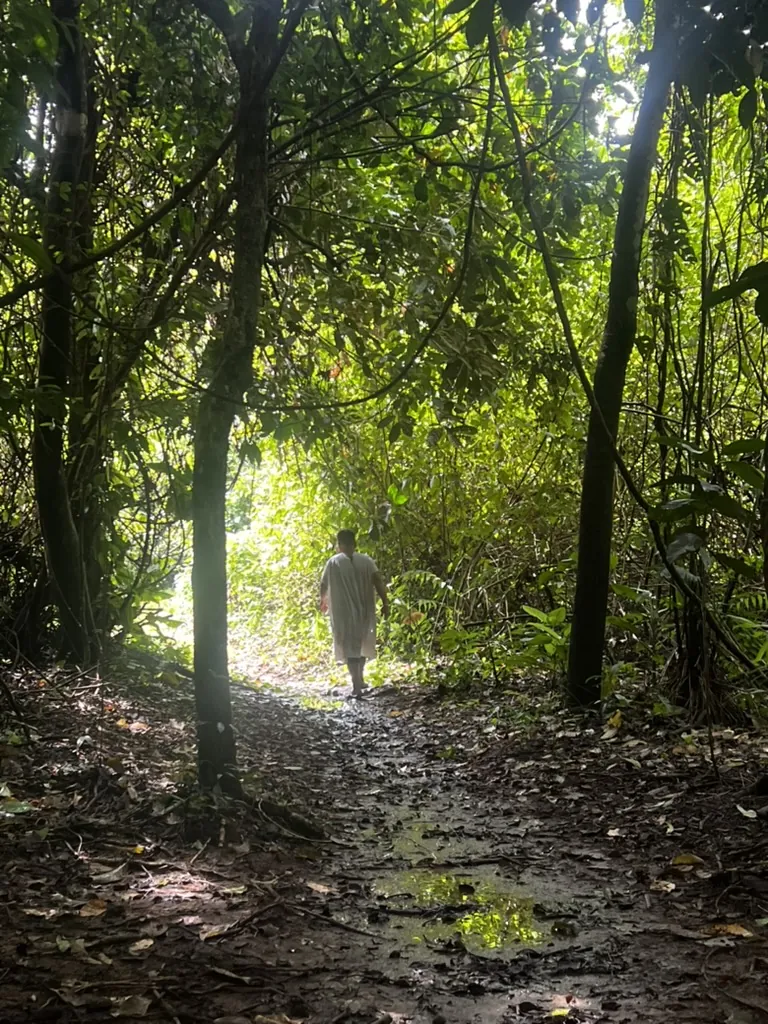
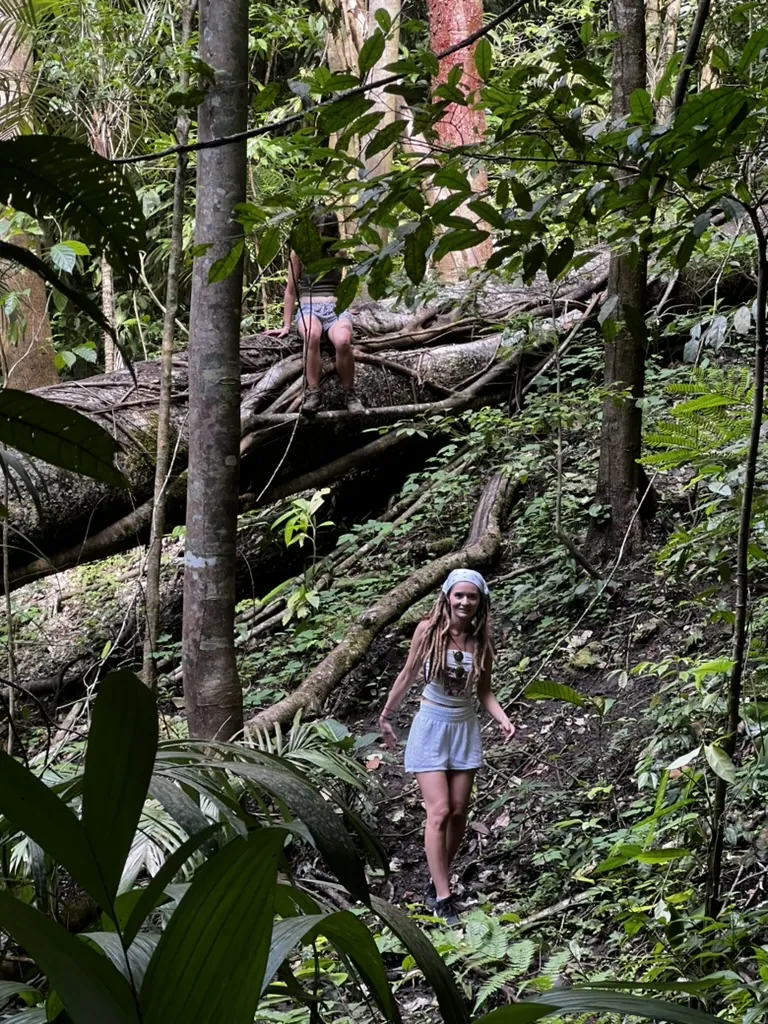
A full day in the forest with our hosts: jungle trails to waterfalls, a swim in the cool Lacanjá River, and the giant ceiba. Hidden in the trees is the reason few outsiders ever come here — the ruins of Lacanjá itself, which you walk into with the community that guards them. This is also where the workshops happen — plant walks, talks on Lacandón cosmovisión, and your first words of their language.
Downriver to Yaxchilán
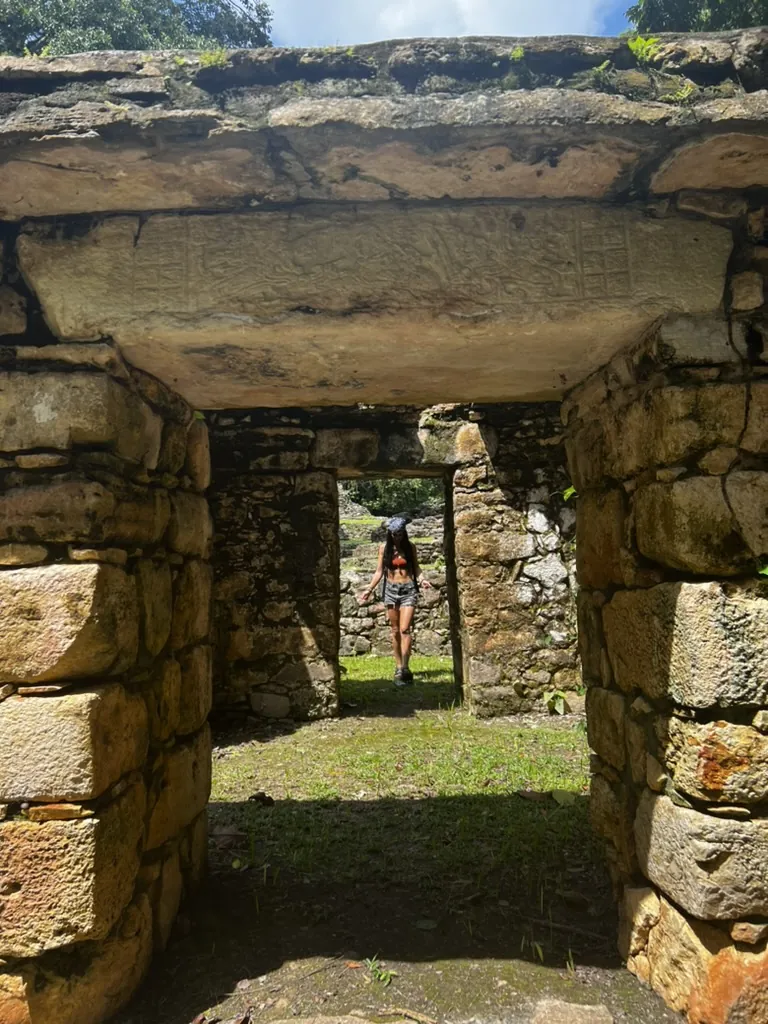
The big one. We take a riverboat down the Usumacinta — Guatemala on the far bank — to Yaxchilán, reachable only by water. Through the dark passages people call the Labyrinth, up Structure 33 with its stone roofcomb, and into the main plaza, where spider monkeys cross the treetops and howler monkeys roar toward evening.
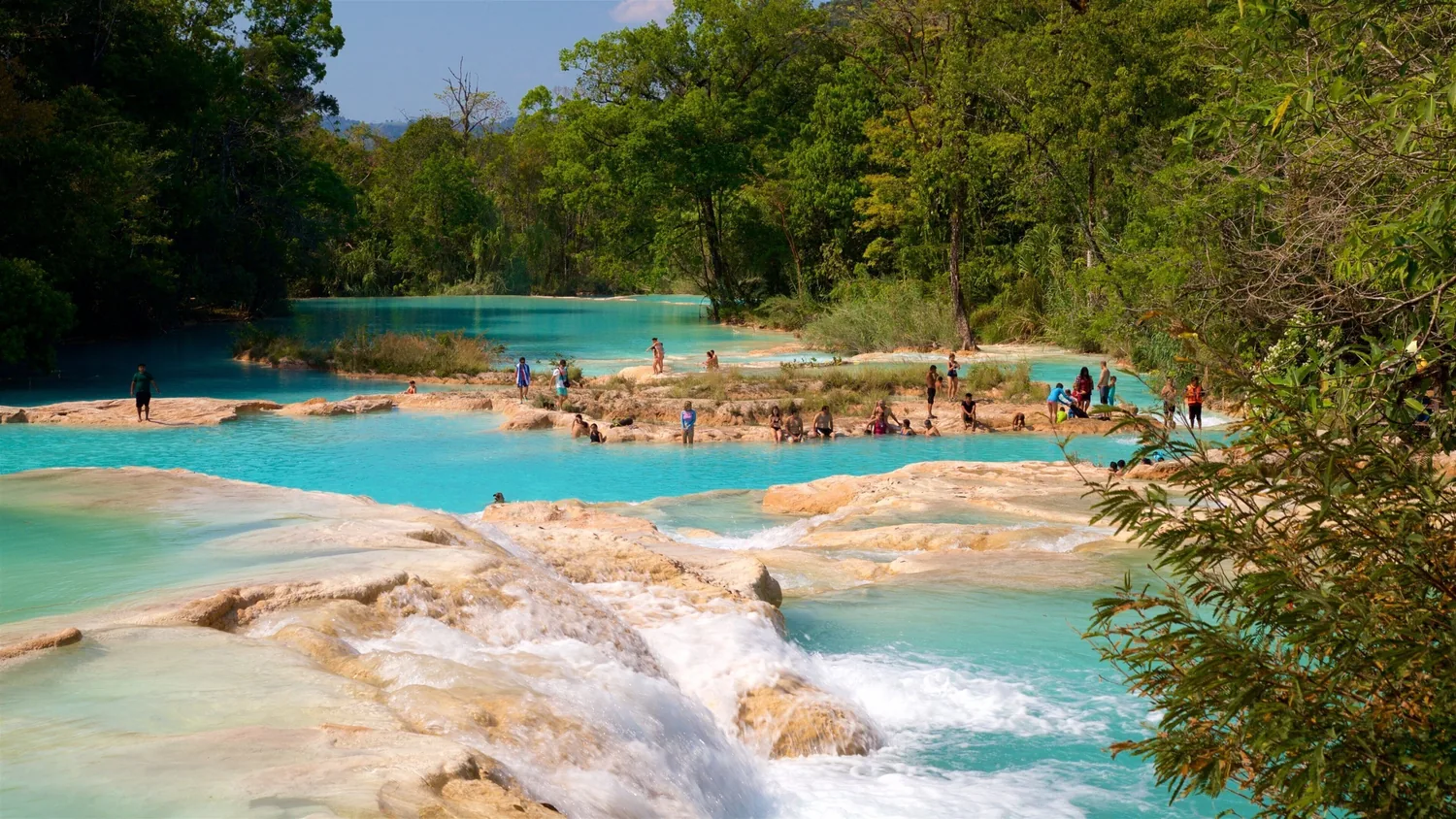
Turquoise water
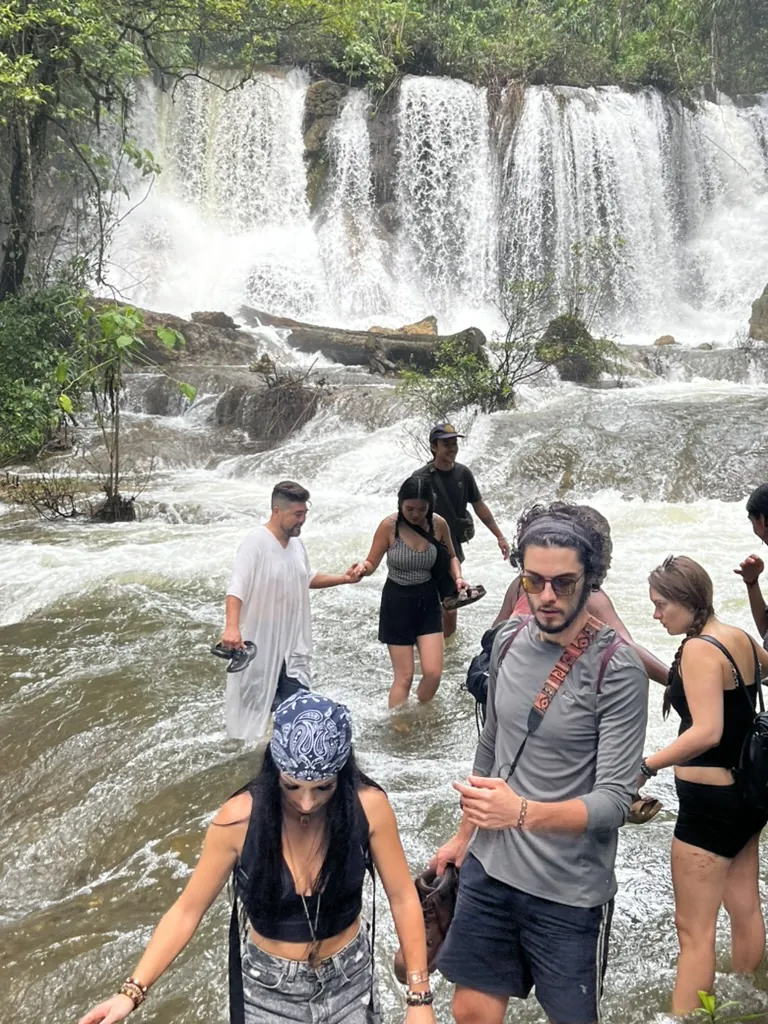
We start back toward Palenque and stop at Agua Azul, where the river spills over terraces of white rock into pools of astonishing turquoise. Bring your swimsuit — the afternoon is for swimming and lying in the sun. Night back near Palenque.
Last light
A final morning, then the drive from Palenque to Villahermosa — about two and a half hours — in time for afternoon flights out. Villahermosa flies domestic only, so give yourself a buffer and aim for departures from mid-afternoon on.
This is the plan we run. The exact order and timing can change with weather, river levels, and access to the sites and communities — we’ll always make the call that’s best for the group and the places we visit.
Wildlife
Who else you might meet.
This is wild country — the Gulf lowlands, the Lacandón rainforest, and the Usumacinta River, alive with animals. On past trips, groups have spotted:
And, if the forest is generous, the tracks of tapir or jaguar — rarely seen, always there.
More than a tour
Not a standard tour — this is an immersion into the living Maya world.
You’ll travel beyond the familiar archaeological sites and into places most visitors never reach — remote ruins, unexcavated structures, monkeys, jungle trails, sacred landscapes, and communities where Maya cosmology is still part of everyday life.
The journey is led by Dakota Wint — Dakota of Earth — who has been returning to Lacanjá and working with local Lacandón Maya families since 2019 — a level of access, trust, and context that’s difficult to reproduce on a conventional tour.
The group is kept intentionally small, so the experience stays immersive, flexible, and personal.
For anyone drawn to ancient civilizations, living traditions, mythology, archaeology, and the deeper spiritual world of the Maya, this is a rare chance to experience it from the inside.
What you get
What’s included.
What's included
- Led in person by Dakota Wint (Dakota of Earth), with expert local guides at each site
- The riverboat journey on the Usumacinta to Yaxchilán
- All ground transport between sites
- Shared accommodation along the route, in gendered rooms (private upgrade available)
- All meals throughout the trip, with dietary needs accommodated
- Community hosting with Lacandón Maya families in Lacanjá
- Workshops led by the Lacandón: medicinal plants, cosmovisión, and the basics of their language
- All site entrance fees
Not included
- International or domestic flights (to and from Villahermosa)
- Travel insurance
- Alcoholic drinks
- Personal expenses and tips
Real jungle travel: some walking on uneven ground, warm and humid days, and a river boat ride. Reasonable fitness helps. Your dates are set — March 25–31, 2027. Because this is a small trip led by a public figure, the full day-to-day logistics and exact locations are shared privately with confirmed travelers — you’ll get a pre-departure PDF with the detailed schedule, packing list, hospitals, and everything you need once you book.
Or email info@thecommunitygarden.org with a question first.
From the trips
Scenes from past departures.
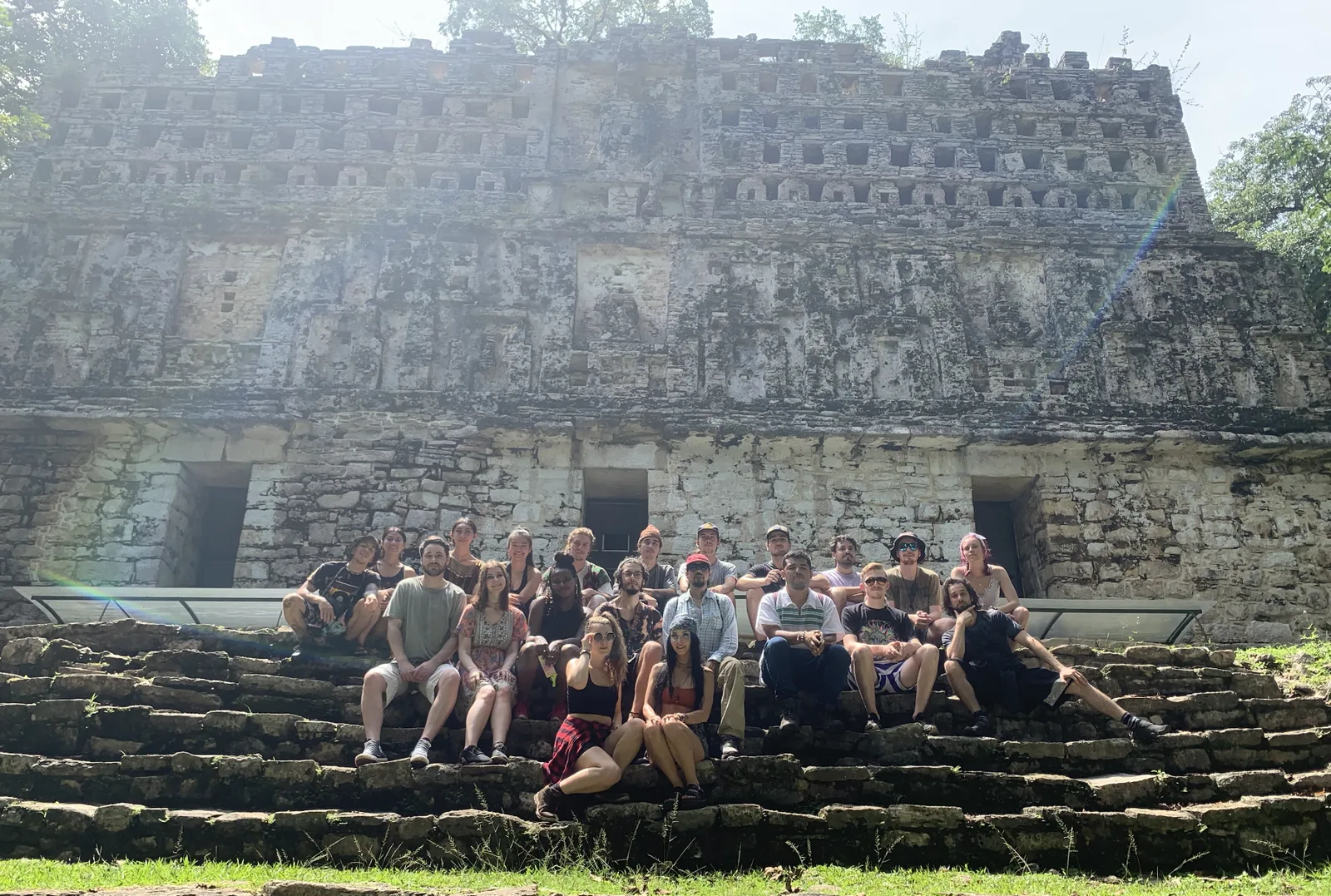
Our own groups on this route, in the ruins and rivers of Tabasco and Chiapas.
Book your place
Reserve with a $1,000 deposit.
A $1,000 deposit books your spot on the March 25–31, 2027 departure — a small group (max 15) led by Dakota Wint. The first 5 travelers pay the $2,500 early-bird rate; after that it’s $2,850. The rest is paid at the start of the trip. At checkout you’ll choose your room (shared is included, or a private upgrade for +$500), add an emergency contact, and note any dietary needs.
If plans change: if we cancel the departure, your deposit comes back in full. If you cancel, it carries as credit toward a future trip.
Paying the balance: the rest is paid at the start of the trip. We prefer cash — in the jungle it goes straight to the families, cooks, boat operators, and guides who host us, where cards don’t reach. Prefer not to carry it? Pay ahead by bank transfer, Zelle, Stripe, PayPal, or card.
Deposit checkout is secured by Stripe. Booking for two or more? Adjust the quantity in the cart. Questions before you commit? Email info@thecommunitygarden.org.
Where your money goes
A foundation-led excursion.
The Community Garden is a U.S. 501(c)(3) nonprofit, and the profits from this journey go into our programs, directed wherever the need is greatest. Traveling with us funds the work.
Know before you go
Everything you need to plan.
Packing list, rooming, visas, health, age, booking terms and safety
What to pack
- Lightweight, breathable clothing for hot, humid days
- Long sleeves and trousers for sun, jungle, and mosquitoes
- Sturdy closed-toe shoes for climbing ruins, plus sandals
- A light rain layer — jungle showers come fast
- Swimwear and a quick-dry towel for waterfalls and rivers
- Hat, sunglasses, and high-SPF sunscreen
- Insect repellent (DEET or picaridin)
- Headlamp or flashlight for Yaxchilán’s dark passages
- Refillable water bottle and a small daypack
- Any personal medications and a basic first-aid kit
Health
See a travel-health clinic before you go. For the lowlands they’ll usually cover hepatitis A, typhoid, and mosquito-borne illness — dengue is present, and parts of rural Chiapas are malaria-risk areas. Bring repellent and long sleeves for dusk.
Rooming
Your place is based on shared, same-gender rooms. Traveling solo? We’ll pair you with another traveler of the same gender at no extra charge. Prefer your own room? Add a private-room upgrade for $500 for the week.
Visas & entry
Bring a passport valid for the length of your stay. Most travelers — including U.S., Canadian, U.K., E.U., and Australian citizens — don’t need a visa for a short tourist visit to Mexico and simply complete an entry form on arrival. You’re responsible for confirming the rules for your own nationality before you travel.
Climate & fitness
Late March is hot and humid, often above 30°C / 85°F. This is a moderately active trip: uneven stone steps, some steep temple climbs, a few hours of walking on jungle trails on the biggest days, and a river boat. You don’t need to be an athlete, but you should be comfortable on your feet in heat and on stairs. Clean drinking water is provided throughout — don’t drink the tap. Tell us about any dietary needs, allergies, or mobility concerns and we’ll plan around them.
Getting there
Fly into Villahermosa (airport code VSA), where the trip begins and ends. VSA flies domestic only, so from outside Mexico you’ll connect through Mexico City or Cancún. Flights aren’t included; once you reserve, we’ll help you time your arrival and departure.
Group size
A small group, capped at 15 travelers — big enough for good company, small enough to stay personal.
Age
Travelers under 18 are welcome with a parent or guardian. There’s no upper age limit; see the note on climate and fitness above.
Booking & deposit
The first 5 travelers pay an early-bird $2,500; after that it’s $2,850. A $1,000 deposit reserves your place; the rest is paid at the start of the trip. We prefer cash because it goes straight to the Lacandón families, cooks, and guides who host us, where cards don’t reach — but if you’d rather not carry it, you can pay the balance ahead by bank transfer, Zelle, Stripe, PayPal, or card. Have questions before you commit? Email info@thecommunitygarden.org.
If plans change
If we cancel the departure, your deposit is refunded in full. If you have to cancel, your $1,000 carries forward as credit toward a future Community Garden trip.
Safety & insurance
You travel with Dakota Wint and experienced local guides who know this region and its communities well; we watch conditions daily and adjust the plan when needed. The Usumacinta boat to Yaxchilán runs with seasoned local operators and life jackets. Phone signal drops off in the deep jungle, so we brief the group on the plan and carry a first-aid kit; the nearest hospitals are in Palenque and Villahermosa. Comprehensive travel insurance with medical evacuation is the one thing we ask every traveler to arrange, and once you book we send a pre-departure PDF with the packing list, nearest hospitals, health guidance, and emergency contacts.